Multiple LOA's?
Reality is more complex than apps assume
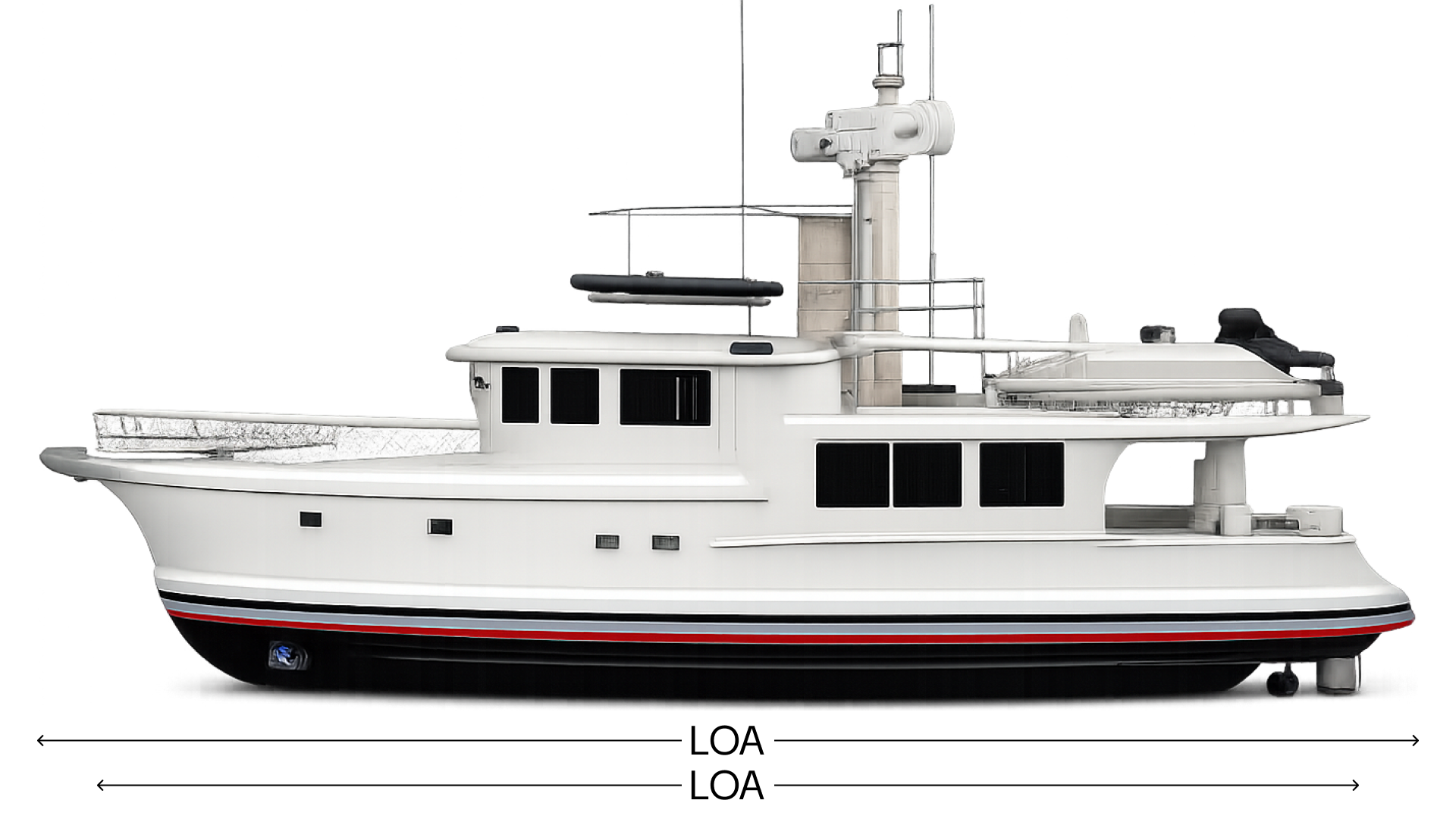
If you've ever tried to enter your yacht's details into management software, you've likely encountered a frustrating limitation: a single field for Length Overall (LOA). Enter one number and move on. Simple, right?
Not if you actually own a yacht.
The Myth of the Single LOA
For those outside the marine industry, LOA seems straightforward—it's just how long the boat is. But any experienced yacht owner, captain, or marine surveyor knows the reality is far more nuanced.
Your yacht doesn't have one LOA. It has several:
- Physical LOA: The actual measured length from the tip of the bow to the stern
- Declared LOA: What's listed on your registration documents
- Reported LOA: The measurement used for marina berth calculations
- Certified LOA: What appears on classification certificates
- Insurance LOA: The figure your underwriter has on file
And here's where it gets interesting—these numbers are often different.
Why the Discrepancy?
Different organizations measure LOA for different purposes, using different standards:
Marina Berths
Marinas typically measure to the furthest point of the vessel, including bowsprits, swim platforms, and tender davits. This is what determines your berth fees and where you can dock.
Registration Documents
Flag state authorities may use hull-only measurements or include specific appendages based on their regulations. A yacht registered in the Cayman Islands might show a different LOA than the same yacht under a different flag.
Classification Societies
Lloyd's, RINA, or Bureau Veritas each have their own measurement protocols. These certificates are crucial for commercial operations and insurance.
Insurance Policies
Underwriters may use the largest measurement for risk assessment or a standardized figure for premium calculations.
Race Ratings
If you compete, your rating certificate will show yet another LOA based on specific racing rule measurements.
The Real-World Problem
Imagine this scenario: You're trying to book a berth at a new marina. They ask for your LOA. Which number do you give them?
The physical measurement? That might not account for your new swim platform. The registration figure? That could be outdated. The marina at your home port uses a different measurement altogether.
Now multiply this confusion across every interaction: insurance renewals, charter agreements, refit planning, race entries, and international port clearances. Each requires an accurate LOA—but they don't all want the same number.
What Most Software Gets Wrong
Traditional yacht management apps were designed with a database mindset: one yacht, one record, one LOA field. This works fine for simple cases but fails dramatically for:
- Superyachts with complex appendages and tender garages
- Sailing yachts where bowsprit inclusion varies by authority
- Any vessel that has undergone structural modifications
- Yachts operating in multiple jurisdictions
When you're forced to choose a single LOA, you end up with inaccurate records somewhere in your documentation chain. This leads to booking errors, insurance discrepancies, and compliance headaches.
A Better Approach: Contextual Data Modeling
The solution isn't to pick the "right" LOA—it's to model all of them with their proper context.
Each LOA measurement should be stored with:
- The source: Where did this measurement come from?
- The purpose: What is this measurement used for?
- The date: When was it recorded?
- The authority: Which organization provided or certified it?
- The method: How was it measured?
This contextual approach means you always have the right number for the right situation. Need your registration LOA for a port clearance? It's there with the document reference. Marina asking for the docking length? You have that too, with the appendages included.
Beyond LOA: A Broader Pattern
This LOA challenge illustrates a broader truth about yacht management software: reality is almost always more complex than a simple form field assumes.
The same pattern applies to:
- Beam measurements (varies with tender stowage configuration)
- Draft figures (changes with load and fuel levels)
- Gross tonnage (different calculations for different purposes)
- Engine hours (multiple engines, different service intervals)
- Crew certifications (valid in some jurisdictions but not others)
Software that acknowledges this complexity doesn't just store data better—it helps you manage your yacht more effectively.
The YachtPrep Difference
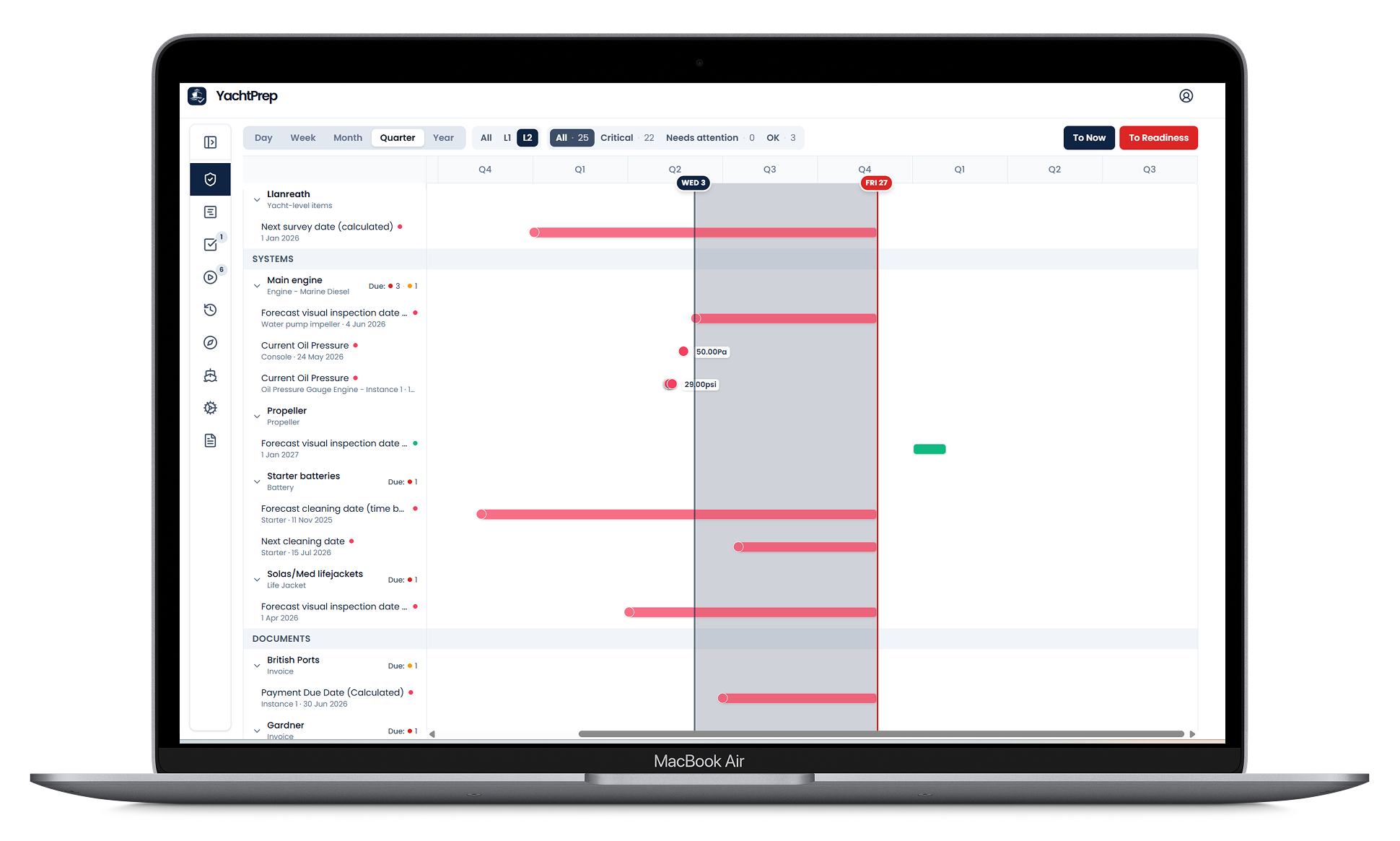
This is exactly why we built YachtPrep differently. Instead of forcing yacht owners into oversimplified data models, we've created a system that mirrors the actual complexity of yacht ownership.
Every LOA can be stored with its source, purpose, and context. When you need a specific measurement—whether for a marina booking, insurance renewal, or race entry—you'll have the right figure at your fingertips.
Because your yacht deserves software that understands it as well as you do.
About
YachtPrep Team
YachtPrep Team is a passionate developer and boating enthusiast with years of experience in web development and maritime activities. They love sharing knowledge and helping others navigate the waters of both coding and boating.